
Affiliates must ensure every asset they publish with a reserve is highly likely to sell. The only way to determine this is to identify the asset's approximate value and set the maximum allowable reserve based on a percentage of the asset's value.
Very Important: Don't agree to sell any asset with a reserve before making sure the seller's desired reserve falls below the maximum allowable reserve you've set for that asset.
The following simple formula is helpful in establishing the maximum acceptable reserve for any asset:
- Determine approximate asset value -- a quick search of K-BID's (or another online auction company) closed auctions will provide you a fair range of market value.
- Determine the % of value you'll accept for reserves (no higher than 70% of value).
- Multiply the average asset value by reserve % to get the high end $ value for the reserve on that asset.
Suggested Tools for Asset Research
There are a number of suggested venues for researching asset values and acceptable reserve amounts:
- Machinery Trader - use the "auction results" detailed search to find high, low and average valuations based on your search criteria (example)
- Richie Bros. - access past auction results on all types of commercial/industrial assets (registration required)
- Craigslist - keep in mind that these listings often have "wishful thinking" or negotiable offer pricing. If your seller uses Craigslist pricing as their benchmark, they may not be ready for an auction.
- eBay - useful for household and estate item pricing. Use the "sold listings" filter in the advanced search or in the search sidebar. Be aware that many eBay listings can also be unrealistic, specifically "Buy It Now" prices.
- Kelly Blue Book and NADA Guides for vehicles - if a seller wants a reserve that is at or above KBB/NADA trade-in value, the asset is unlikely to sell at auction.
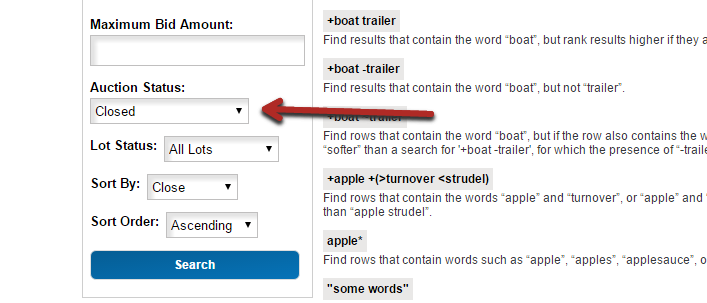
- K-BID Archives - use the advanced search and set the auction status to Closed.
Why Does K-BID care about Reserve Amounts?
K-BID's goal is that every asset listed on the website is sold to the high bidder. In an effort to make this goal a reality, we need every affiliate to do the due diligence necessary to recognize unrealistically high reserves and refuse to take those items on consignment. Affiliate's should have complete confidence every asset they publish on K-BID.com will sell to the highest bidder.
Items that fail to meet reserve harm K-BID and the affiliate network in a variety of ways:
- It undermines the service that we provide to PAYING customers. This is especially true if a seller has multiple items that do not meet reserve. By allowing people to "test the market" for free or a low fee, it makes it harder to justify and defend the costs of our services to other clients.
- Buyers have expressed with their bidding patterns (or lack thereof) and verbally their disinterest in items with reserves. Too many reserve prices could deter potential buyers from even registering on the website.
- It makes the process for qualifying future auction sellers difficult. If every item has a reserve, the discussion and education of sellers about the negative impact of reserves is not an easy conversation to have. The online auction process can be difficult for sellers - our job is to explain the benefits of the auction method and how our expertise, venue and marketing plan will bring the right buyers to their assets.
Comments
0 comments
Please sign in to leave a comment.