
You finally get that call....a prospective seller with a whole lot of construction equipment he needs liquidated ASAP.
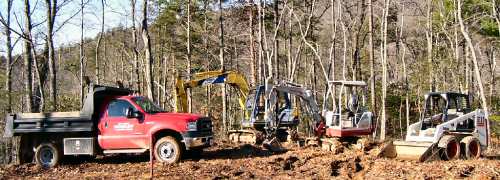
The caller is from XYZ Landscaping, Inc. and his list of equipment includes, "3 or 4 trucks, a couple of trailers, a bobcat and of course a bunch of tools and miscellaneous stuff that has been building up over the years." The prospect of landing this sale is more than a little exciting. After composing yourself, you tell the caller you're on your way over. As you pull up to XYZ Landscaping, the assets come into view and you can hardly believe your luck...this auction should hit $50k easily!
Just as you finish your walk through and you start getting into the details of the sale, the seller drops the bomb you were hoping not to hear "Yep, I know what this stuff is worth, so I'm going to need minimums on all of it." As he tells you the price he is looking for on each item, your heart sinks. All of a sudden you realize his $50,000 in assets will be lucky to hit $5,000 in winning bids. The seller wants to set the reserves way too close to actual value.
You are now in a no win situation. If you don’t agree to the reserves, the seller will just move onto the next guy to sell his equipment. If you agree to the reserves and the bids don’t reach the reserves, you’re going to end up disappointing everybody associated with the sale and potentially damaging your own credibility — the seller will be irritated that nothing sold; the bidders will be upset because you wasted their time by even publishing an auction with such unrealistic reserves; K-BID and the other affiliates in the network will be unhappy about the hit the website’s reputation takes when auctions close and nothing sells; and to top it all off, you won’t be compensated for all the time it took you to put the auction together and staff an inspection.
The question is, does this seller really want an auction? Or does he just want to see the prices that he could get at auction? This is a situation that many are all too familiar with and a conversation that every auctioneer will go through at some point in their career. In order to answer this question, I want to break down what an auction is in its simplest form.
As described by the dictionary, "An auction is a public sale at which things are sold to the people who offer to pay the most." Notice how it is not described as a public sale in which the seller agrees that the buyer's bid has met their expectations.
That definition is so simple, but yet perfectly describes why buyers love auctions and how the auction method has been proven to work for hundreds of years. Buyers are driven to auctions because of the prospect of getting a deal. Sellers use auctions because they can liquidate many assets in one event and it is the most efficient way to find fair market auction value for an asset. The plain truth is: When the "prospect of getting a deal" mentality is taken away by seller minimums, many buyers will not even participate for fear of wasting their time. Thus we get into the endless cycle of sellers not trusting the auction format and buyers not being interested in bidding on items with reserves.
So what do you say to XYZ Landscaping about the potential auction above? The answers to the following questions will give you a good idea if the seller is ready for an auction:
How have you arrived at the minimum price required for each item? If the seller is hung up on what the asset initially cost him, you could be in for trouble. Sometimes sellers are unrealistic about the value of their assets. The best way to deal with sellers who want to set reserves close to or higher than asset value is to provide them with a list of what similar or like items have sold for in the past on online auctions. This will give both you and the seller a good idea of the sales range they can expect for their asset.
Do you have these assets listed for sale elsewhere? If so, at what price and for how long? If the seller has had their assets listed for sale at the same price elsewhere, they should not assume that an auction will magically achieve the dream price they had in mind (although anything is possible). If the seller is firm on high reserve prices it may be best to give them some time to see if they can sell the assets themselves, there is a good chance they will be calling you back in 6-8 months when they realize that feat is easier said than done.
What will you do if the items don't sell? Usually a motivation due to financial hardships, convenience or time constraints drive people to the auction format by necessity, If there is no obvious motivation, a seller could just be testing the waters of an auction to see what prices they can get. Some sellers (XYZ Landscaping, Inc.) just are not ready for an auction, and that's OK! It is better for you to discover that fact on the front end rather than after the auction has ended.
The perfect auction seller trusts the auction process and is comfortable that you have the skills and expertise to get them the best return in an auction format. Unfortunately, not every seller will fall into this category. This blog post is meant to get you to think differently about using reserves and give to you some "ammo" when talking to perspective sellers. At the very least, you can take away these 3 points about using reserves:
- It's OK to say no to an auction. We are all here for the same goal, to SELL assets via online auctions. Eliminating or ensuring that reserve prices are very reasonable will give you the best chance for success as an affiliate of K-BID.
- Do not undervalue your time. If you are taking assets with reserves, what is your fee for the unfortunate event that the reserve is not met? Is $25.00 enough to cover the labor, time and effort you put into the auction or should that number be closer to $100 or $200/item?
- You have access to one of the largest online auction networks in the country, do not hide that fact from your sellers! With more than 15,000 visitors each day and nearly 10,000,000 page views each month, K-BID.com brings a huge buying audience to each auction. Auctions are and always will be a a numbers game. Use the quarterly stats sheet to show your sellers the benefits that you have available with K-BID.com.
Comments
0 comments
Please sign in to leave a comment.